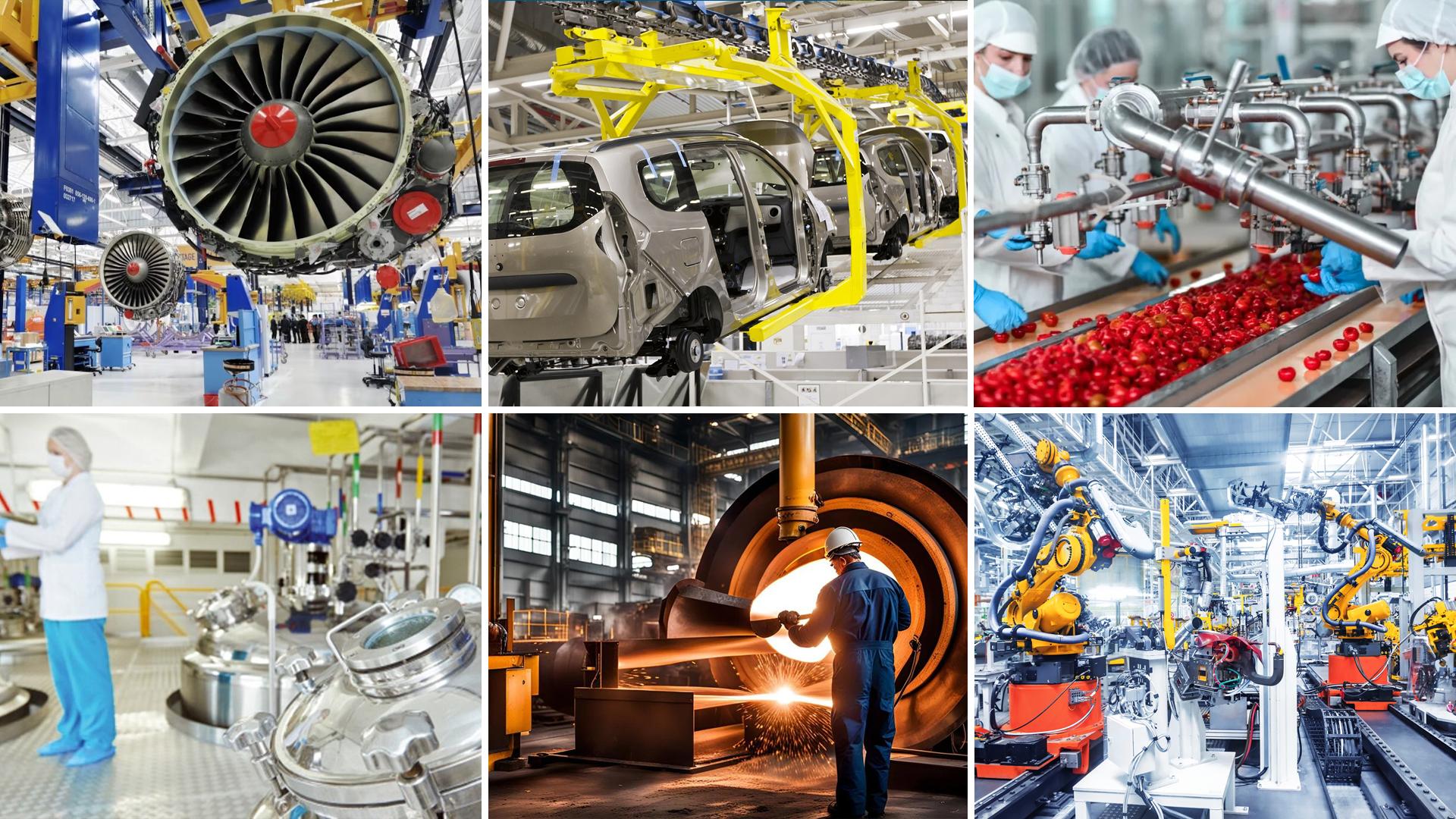
Most products people use every day begin as something almost unrecognizable. Seeds become cooking oil. Plastic pellets become containers. Sheets of metal become tools, parts, and household objects. Wood becomes furniture. With the right machinery, raw materials can be transformed into finished products ready to be used, packaged, or sold.
Behind these transformations is an enormous world of machines, production processes, and manufacturing possibilities that most people rarely see.
Understanding what machines can make is not just about industrial production. It is also about discovering how products are created, what equipment is required, how much production costs, and how manufacturing ideas can become real businesses.
From raw materials to finished products
Manufacturing starts with a material and a process capable of changing its shape, properties, or composition.
Some machines separate materials. Others crush, melt, press, cut, mold, mix, dry, assemble, or package them. A relatively simple machine may produce one specific item, while an automated production line can transform raw materials into thousands of finished products with minimal manual intervention.
The process is often easier to understand through three elements:
Input → Machine → Output
The input is the raw material. The machine performs the transformation. The output is the product.
Consider a few examples:
| Raw material | Machine | Product |
|---|---|---|
| Sunflower seeds | Oil press | Cooking oil |
| Plastic pellets | Injection molding machine | Plastic products |
| Steel wire | Nail making machine | Nails |
| Paper pulp | Egg tray machine | Egg cartons |
| Wood | Wood processing machines | Furniture and wooden products |
| Cement, sand and aggregates | Block making machine | Concrete blocks |
| Agricultural waste | Briquette machine | Fuel briquettes |
These processes can be found in small workshops, agricultural facilities, specialized manufacturers, and large industrial plants. The underlying principle remains the same: machinery makes it possible to turn materials into products with repeatable results.
Machines make products we often take for granted
Many everyday objects are manufactured using equipment designed for a very specific task. Some machines are large, complex, and expensive. Others are compact enough to operate in a small workshop.
Food and beverage
Food manufacturing involves machines that clean, grind, mix, press, cook, dry, extract, and package ingredients.
An oil press, for example, extracts oil from seeds and nuts. A peanut butter machine grinds peanuts into a paste. A grain mill converts grains into flour, while filling machines prepare liquids and other products for packaging.
Raw ingredients can become finished food products through a combination of relatively simple machines or complete automated processing lines.
Construction and building materials
Construction materials are also manufactured using specialized equipment.
Brick and block making machines combine raw materials, mix them, shape them, and compress them into building products. Other equipment manufactures tiles, paving stones, panels, and components used in construction.
These machines can vary considerably in size, output, automation, and the amount of space required to operate them.
Metal products
Metalworking machines transform steel, aluminum, and other metals into components and finished products.
Cutting machines, bending machines, presses, rolling equipment, wire processing machines, and CNC systems are used to manufacture everything from basic hardware to precision industrial parts.
A machine designed to manufacture nails, for instance, can turn metal wire into a finished product through a series of automated cutting and forming operations.
Paper and packaging
Paper processing machines turn raw paper materials or large paper rolls into products used by businesses, retailers, restaurants, and consumers.
Paper cups, plates, bags, cartons, egg trays, and protective packaging are manufactured using equipment designed for cutting, forming, molding, folding, or sealing.
Some machines manufacture individual products, while others operate as part of a complete packaging production line.
Plastics
Plastic manufacturing is one of the most versatile areas of machine-based production.
Depending on the process, machines can transform plastic raw materials into bottles, containers, pipes, furniture components, toys, packaging, and countless other products.
Injection molding, extrusion, blow molding, thermoforming, and plastic recycling are different processes, each requiring equipment designed for specific materials and product characteristics.
Recycling and waste conversion
Not all manufacturing begins with new raw materials.
Recycling machines can transform waste into materials that can be used in another production process. Plastic waste can be shredded and processed into recycled pellets. Wood residues can be compressed into fuel products. Certain agricultural byproducts can be converted into briquettes or other useful materials.
These processes create another manufacturing pathway: turning materials that would otherwise be discarded into products with commercial value.
How much does it cost to make a product?
The cost of manufacturing depends on far more than the price of a machine.
Equipment is only one part of the investment. A production operation may also require raw materials, electricity, labor, workspace, tools, maintenance, packaging, transportation, and additional processing equipment.
Two businesses producing the same product may have very different costs depending on their production volume, machinery, location, suppliers, and operating efficiency.
A small machine may have a relatively low purchase price but limited production capacity. A larger machine may require a greater initial investment while reducing the cost of producing each individual unit.
The important question is not simply how much a machine costs. It is how much it costs to manufacture a product using that machine.
That distinction is essential when evaluating manufacturing opportunities.
Can small machines be used to start a business?
Manufacturing is not limited to large factories.
Many machines are designed for smaller production operations, including workshops, local manufacturers, agricultural businesses, and entrepreneurs looking to produce goods for a specific market.
Some equipment can manufacture products in relatively small quantities, allowing operators to test demand before investing in larger production systems.
Examples include machines that manufacture:
- Cooking oils and food products
- Soap and detergents
- Paper plates and cups
- Concrete blocks and paving products
- Animal feed
- Metal hardware
- Recycled plastic products
- Fuel briquettes
However, owning a machine does not automatically create a profitable business.
Before investing, it is necessary to understand the product, the cost and availability of raw materials, the machine’s real production capacity, the local market, competition, operating expenses, and potential customers.
A machine may be capable of producing thousands of items per day, but production capacity has little value if the finished products cannot be sold at a price that covers costs.
The opportunity lies in connecting the right machine with the right product and a viable market.
What should you know before buying a manufacturing machine?
Machines can differ significantly even when they are advertised for the same purpose.
A buyer should evaluate more than the manufacturer’s stated production capacity or the purchase price.
Important factors include:
- Production capacity: How much raw material can the machine process per hour or per day?
- Product quality: Does the equipment consistently produce items that meet the required specifications?
- Raw materials: What materials are required, and how much do they cost?
- Power requirements: What electricity supply, motor capacity, or other energy source is necessary?
- Labor: How many people are needed to operate and maintain the equipment?
- Space: How much room is required for the machine and the complete production process?
- Automation: Which operations are manual, semi-automatic, or fully automatic?
- Additional equipment: Are mixers, dryers, molds, conveyors, filters, or packaging machines necessary?
- Maintenance: Are spare parts, technical support, and qualified technicians available?
These details help determine whether a machine is appropriate for a particular production goal rather than simply whether it looks capable of doing the job.
Discovering what machines make
The world of manufacturing is much bigger than the products found on store shelves. There are machines designed to manufacture almost every type of everyday product, from simple household items to specialized components used in complex industries.
Some machines are surprisingly affordable. Others require substantial investments, dedicated facilities, and sophisticated production systems. Some manufacture a single product, while others can be adapted to produce different items by changing molds, tools, materials, or settings.
Exploring these machines reveals how products are made, how manufacturing works, and what is required to turn an idea into something tangible.
It also opens the door to questions worth exploring: What machine makes a particular product? How does it work? What does it cost? How much can it produce? What materials does it require? And could it be used to build a business?
These are the questions that make manufacturing worth discovering.
Every product has a process behind it. Every process has a machine. And every machine has a story worth understanding.
