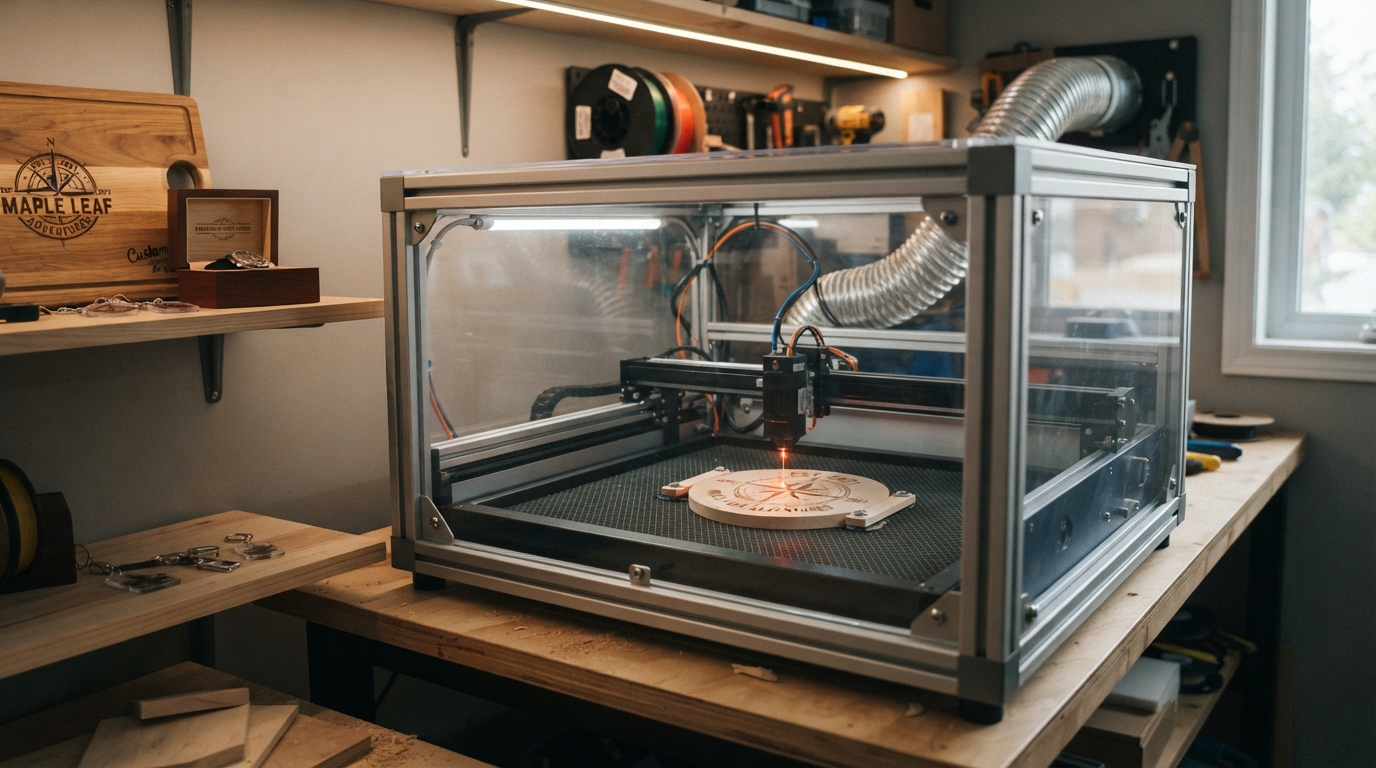
Laser engraving has become a popular manufacturing and personalization method for small businesses because it allows entrepreneurs to produce customized items without requiring large industrial facilities. From personalized gifts and promotional products to signs, accessories, and business merchandise, laser machines can support a wide range of small-scale production activities.
Different laser technologies are designed for different materials and applications. Understanding these differences is essential before investing in a machine.
What products can laser engraving machines make?
Laser engraving and cutting machines can produce a wide variety of products, depending on their power, technology, and compatible materials.
Common products include:
- Personalized wooden gifts
- Engraved cutting boards
- Acrylic signs
- Metal business cards
- Customized keychains
- Jewelry and accessories
- Decorative products
- Corporate gifts
- Personalized drinkware
- Small business branding products
Some machines can engrave existing products, while others can cut materials into custom shapes and dimensions.
This flexibility allows small businesses to produce customized orders, create product collections, and sell personalized merchandise through online stores, marketplaces, local retailers, and corporate customers.
Diode laser engraving machines
Diode lasers are commonly used by small businesses and hobby entrepreneurs because many desktop models are relatively affordable and compact.
They are suitable for applications involving wood, certain plastics, leather, coated materials, and other compatible surfaces.
Depending on their specifications, diode machines can engrave detailed designs and cut thinner materials.
Their lower entry cost makes them attractive to businesses testing demand for personalized products before investing in larger equipment.
However, diode lasers may not be suitable for every material or production requirement. Cutting speed, optical power, working area, and material compatibility should be evaluated before purchasing.
CO2 laser engraving and cutting machines
CO2 lasers are commonly used for cutting and engraving non-metallic materials such as wood, acrylic, leather, paper, and certain plastics.
They are frequently used by businesses producing signs, decorative items, packaging components, displays, and personalized products.
Compared with many desktop diode machines, CO2 systems may offer greater cutting capability and faster production for suitable materials.
Businesses considering a CO2 laser should evaluate working area, laser power, cooling systems, exhaust requirements, machine maintenance, and installation space.
Fiber laser engraving machines
Fiber lasers are particularly suited to marking and engraving many metals.
They are commonly used for engraving stainless steel, aluminum, brass, industrial components, tools, identification plates, and metal products.
Businesses offering personalized metal products, industrial marking, equipment identification, or custom engraving services may benefit from fiber laser technology.
Fiber laser machines are generally more specialized than basic desktop diode machines, and purchasing decisions should consider the materials, production volume, and engraving depth required.
How to choose a laser machine for a small business
Selecting a laser engraving machine involves more than comparing advertised laser power.
Business owners should evaluate:
Material compatibility: Confirm that the machine can process the materials used in the intended products.
Working area: The engraving bed should accommodate the size of the products and materials being manufactured.
Laser power: Power affects cutting capability, processing speed, and the types of jobs the machine can perform.
Software: Compatible design software and file formats are important for creating and importing production designs.
Production speed: Faster processing can increase capacity and reduce labor time when handling larger orders.
Maintenance: Laser sources, optics, cooling systems, ventilation, and mechanical components may require regular maintenance.
Safety: Enclosures, exhaust systems, protective equipment, and appropriate operating procedures are essential for safe laser operation.
Startup costs and additional equipment
The laser machine is only one part of a laser engraving business setup.
Depending on the production process, entrepreneurs may also need:
- Computer and design software
- Ventilation and filtration systems
- Material storage
- Rotary attachments
- Workholding accessories
- Cutting and finishing tools
- Packaging supplies
Startup costs vary significantly between desktop diode machines, enclosed CO2 systems, and industrial fiber laser equipment.
Businesses should consider the total cost of establishing a safe, functional workspace rather than focusing exclusively on the machine price.
Building a business around laser engraving
Laser engraving machines can support different business models, including online personalization, custom manufacturing, corporate merchandise, signage, and local engraving services.
The most practical approach is to identify a product category and customer group before purchasing equipment.
A machine with more power or a larger working area is not automatically the best investment. The right equipment is the one capable of producing the intended products at a competitive cost, with sufficient quality, reliability, and capacity to support the business.
Read More:

Be First to Comment