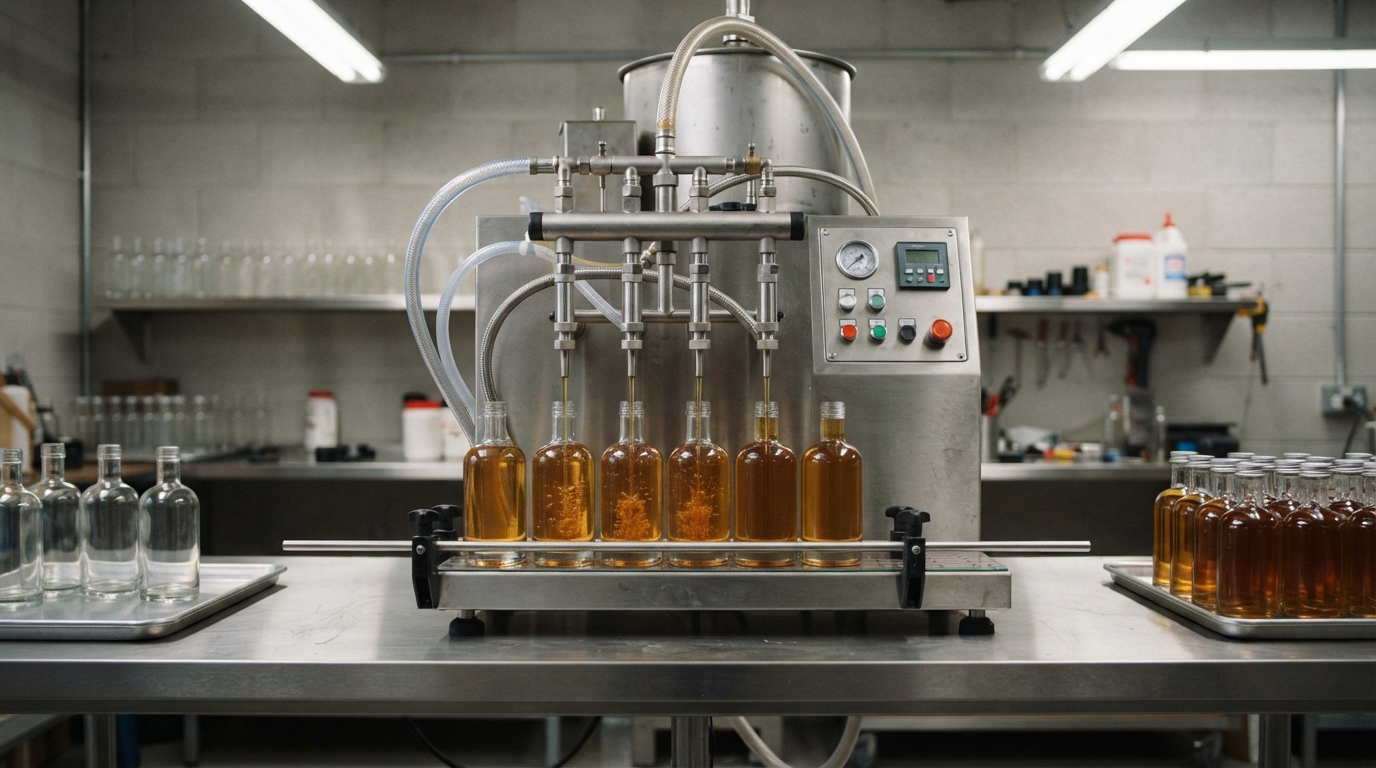
Bottle filling machines are used by businesses that package liquids for retail, commercial distribution, or direct sales. They allow manufacturers to fill containers with controlled quantities of products while improving production consistency and reducing manual labor.
For entrepreneurs starting a small manufacturing operation, bottle filling equipment can be used to produce packaged beverages, cleaning products, cosmetics, oils, sauces, and other liquid products.
Choosing the right machine depends on the type of liquid, container size, production volume, and available budget.
What products can bottle filling machines produce?
Bottle filling machines are used across several industries because many commercial products are sold in liquid form.
Common applications include:
- Bottled water
- Juices and beverages
- Sauces and syrups
- Cooking oils
- Liquid soaps
- Cleaning products
- Cosmetics
- Shampoos and conditioners
- Industrial liquids
Different liquids require different filling technologies. Water-like products can flow easily through many filling systems, while thicker products such as creams, honey, sauces, and gels may require pumps designed for higher viscosity.
The material used for the bottles and containers should also be compatible with the product being packaged.
Manual bottle filling machines
Manual filling machines are designed for small production operations that do not require high output.
They are generally more affordable and may use hand-operated pumps, valves, or dispensing mechanisms to fill containers.
These machines can be suitable for startups producing limited quantities, testing new products, or packaging small batches for local customers.
Manual equipment usually requires more operator involvement and may be slower than automated systems, but it can provide a practical starting point for businesses with limited capital.
Semi-automatic bottle filling machines
Semi-automatic machines combine manual handling with mechanical filling controls.
Operators typically position bottles under filling nozzles and activate the filling process through a control system, foot pedal, or button.
These machines may offer adjustable filling volumes, multiple nozzles, pumps, and other features designed to improve consistency and production speed.
Semi-automatic equipment is commonly used by small manufacturers that have outgrown manual filling but do not yet require a fully automated production line.
Automatic bottle filling machines
Automatic bottle filling machines are designed to process larger quantities of containers with less direct operator involvement.
Depending on the machine, bottles may move through the system using conveyors while filling heads dispense predetermined quantities of liquid.
Automatic systems can integrate several production stages, including bottle positioning, filling, capping, labeling, and product handling.
They are generally more appropriate for businesses with established demand, higher production volumes, or requirements for consistent output across larger batches.
Additional equipment for a bottling operation
A bottle filling machine may be only one component of a complete packaging setup.
Depending on the product and production process, businesses may also require:
- Bottle rinsing equipment
- Capping machines
- Labeling machines
- Date coding equipment
- Bottle conveyors
- Mixing tanks
- Product storage tanks
- Packaging and sealing machines
Some small manufacturers operate with separate machines for each stage, while others purchase integrated production systems.
The choice depends on available space, product requirements, production volume, and investment capacity.
How to choose a bottle filling machine
Before buying a bottle filling machine, business owners should evaluate several technical and operational factors.
Liquid viscosity: Thin liquids, oils, sauces, and thick products may require different pumps and filling mechanisms.
Filling accuracy: Consistent filling volumes help reduce product waste and maintain packaging standards.
Bottle size: The machine should accommodate the containers used by the business, including different heights, diameters, and shapes when necessary.
Production capacity: Filling speed should match expected demand without creating unnecessary investment.
Material compatibility: Equipment components must be suitable for contact with the product, including requirements related to corrosion, cleaning, and sanitation.
Cleaning requirements: Some products require frequent cleaning or specialized procedures to prevent contamination and product residue.
Expansion: A machine that allows adjustments or integration with additional packaging equipment may be useful as the business grows.
Starting a small bottling business
Bottle filling machines can support businesses producing their own products or packaging liquids for other companies.
Potential business models include private-label products, contract packaging, cosmetics manufacturing, cleaning products, specialty beverages, and locally produced food items.
Before investing in equipment, entrepreneurs should identify the product, target market, packaging format, production volume, regulatory requirements, and operating costs.
A small semi-automatic machine may be sufficient to begin production, while higher demand may eventually justify automated equipment.
The best bottling setup is one that matches the product and business model, delivers reliable filling performance, and can operate efficiently without creating unnecessary costs.
Read More:

Be First to Comment