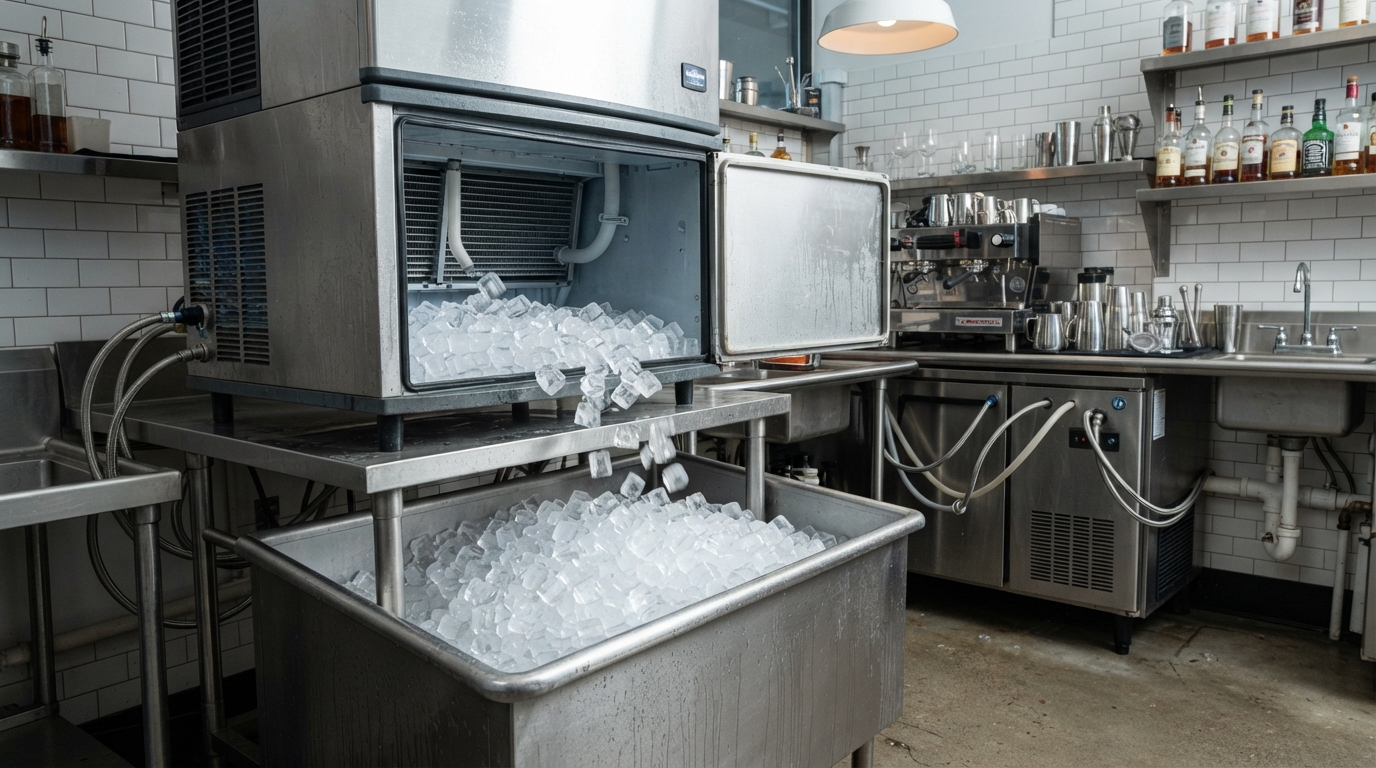
Ice is an essential part of many restaurant, bar, hotel, and beverage operations. It is used for soft drinks, cocktails, iced coffee, food presentation, cooling, and customer service.
Commercial ice machines are designed to produce ice continuously or in repeated cycles, allowing businesses to maintain a supply throughout the day. Selecting the right machine requires understanding production capacity, ice type, storage requirements, available space, and expected demand.
Types of commercial ice machines
Commercial ice machines produce different types of ice depending on their design and intended application.
Cube ice machines produce solid cubes commonly used in restaurants, bars, hotels, and beverage service. Cubes melt relatively slowly and are suitable for many drinks.
Nugget ice machines produce softer, smaller pieces of ice that are popular in certain beverage applications and self-service environments.
Flake ice machines produce thin, soft ice that is commonly used for seafood displays, food presentation, produce cooling, and some food processing applications.
The type of ice required should be determined before selecting a machine because different products and customers may have different preferences.
Ice production capacity
Production capacity is one of the most important factors when purchasing a commercial ice machine.
Manufacturers typically advertise the amount of ice a machine can produce over a 24-hour period under specified conditions. Actual output may vary depending on ambient temperature, water temperature, ventilation, installation, and operating conditions.
Restaurants with moderate beverage demand may require smaller machines, while bars, hotels, and high-volume restaurants may need larger production systems.
A business should estimate daily ice consumption rather than choosing a machine based solely on its advertised production capacity.
Ice storage bins and dispensers
Ice production and ice storage are separate considerations.
Many commercial ice machines produce ice and discharge it into a storage bin. The bin allows businesses to maintain a supply of ice during periods of high demand when production may not keep up with immediate consumption.
Ice storage capacity should be appropriate for the business’s peak operating periods.
Some operations use ice dispensers that allow employees or customers to access ice more conveniently. These systems may be useful in hotels, healthcare facilities, cafeterias, and self-service beverage areas.
Choosing the right machine for a restaurant or bar
The type of business influences the machine selection.
Restaurants generally require ice for beverages, food preparation, and occasional cooling applications.
Bars may consume large quantities of ice for cocktails and mixed drinks, particularly during evenings and weekends.
Hotels may need ice machines distributed across different floors or locations to serve guests.
Cafés and beverage shops may require ice for iced coffee, smoothies, tea, and cold drinks.
The machine should match the type of ice, daily volume, peak demand, and available storage space.
Installation and maintenance requirements
Commercial ice machines require proper installation to operate efficiently.
Depending on the model, installation may involve water connections, drainage, electrical requirements, ventilation, and sufficient clearance around the machine.
Water quality is also important. Filtration may help reduce scale buildup, improve equipment performance, and extend service life depending on local water conditions.
Regular cleaning and sanitizing are essential because ice is used in food and beverages. Businesses should follow the manufacturer’s maintenance schedule and applicable food safety procedures.
How much ice machine capacity does a business need?
The amount of ice required varies considerably between businesses.
A restaurant serving primarily hot meals may use less ice than a cocktail bar or beverage-focused operation. Seasonal demand, customer volume, drink menu, and operating hours also influence consumption.
Business owners should review expected daily use, peak periods, storage capacity, and the availability of backup ice before purchasing equipment.
Investing in commercial ice equipment
Commercial ice machines can represent a significant investment, particularly for businesses requiring high production capacity.
Comparing machine output, ice type, storage compatibility, water consumption, energy efficiency, maintenance costs, and warranty coverage can help identify the most appropriate equipment.
A properly sized ice machine can support beverage service, improve operational reliability, and reduce the risk of running out of ice during busy periods.
Read More:



Be First to Comment