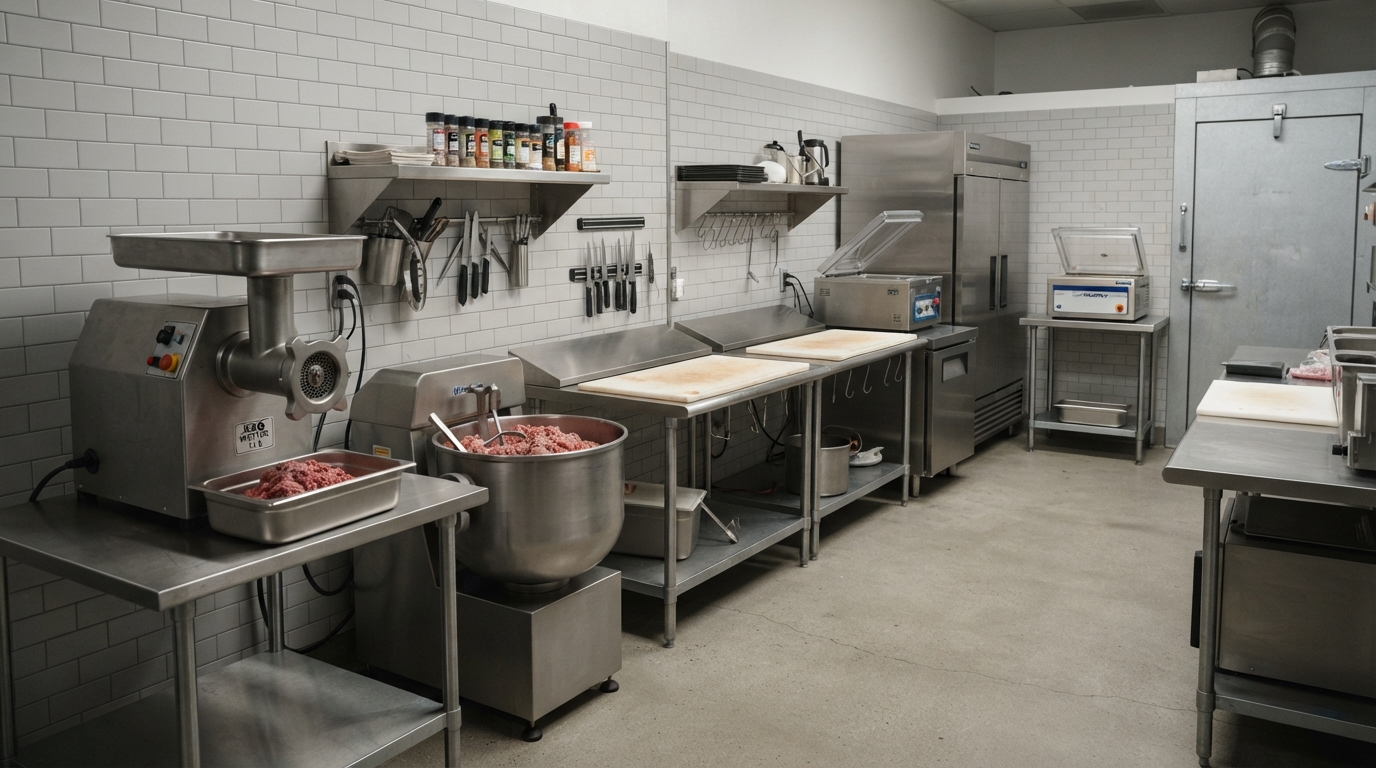
Commercial food mixers are used by bakeries, restaurants, catering businesses, food manufacturers, and other operations that need to combine ingredients consistently and efficiently.
Unlike household mixers, commercial machines are designed to handle larger batches, repeated production cycles, and more demanding operating conditions.
The type of mixer required depends on the ingredients, product texture, batch size, mixing speed, and production process. Choosing the right machine can help improve consistency, reduce preparation time, and support higher output.
Planetary mixers
Planetary mixers are among the most versatile machines used in commercial food preparation.
Their mixing tools rotate around their own axis while also moving around the mixing bowl. This motion helps distribute ingredients throughout the bowl.
Planetary mixers are commonly used for:
- Cake batters
- Frostings and creams
- Cookie dough
- Mashed potatoes
- Fillings
- Light doughs
Many models include interchangeable attachments such as beaters, dough hooks, and whisks.
They are frequently used in bakeries, restaurants, catering kitchens, and small food production businesses that need a single machine capable of handling multiple tasks.
Spiral mixers for dough production
Spiral mixers are designed primarily for mixing bread dough, pizza dough, and other products requiring substantial kneading.
The spiral-shaped mixing tool works together with the rotating bowl to develop dough efficiently.
Spiral mixers are available in different capacities, from smaller machines used by independent bakeries and pizzerias to larger models designed for commercial production.
Businesses should consider dough capacity, mixing speed, bowl design, motor performance, and the amount of dough produced per batch.
Commercial mixers for sauces and liquid products
Food manufacturers producing sauces, dressings, fillings, creams, and liquid-based products may require specialized mixing equipment.
Depending on the formulation, equipment may include industrial agitators, high-shear mixers, homogenizers, mixing tanks, and emulsifying systems.
Some products require gentle mixing, while others need high-speed processing to achieve a smooth or uniform texture.
The consistency of the product, ingredients, batch size, and production method should determine the type of mixing technology.
Mixer capacity and production requirements
Mixer capacity is one of the most important purchasing considerations.
Manufacturers may advertise bowl volume or maximum mixing capacity, but these measurements are not always equivalent. A machine’s practical capacity depends on the ingredients and the type of product being processed.
Dense doughs may require different capacity limits than liquid batters or light creams.
Business owners should check the manufacturer’s recommended batch sizes and operating specifications before purchasing.
Features to compare when buying a commercial mixer
Commercial mixers vary in design, power, controls, and accessories.
Important features include:
- Motor power
- Mixing speed options
- Bowl capacity
- Available attachments
- Construction materials
- Safety guards
- Ease of cleaning
- Replacement parts
- Warranty and service support
Machines with multiple speeds and interchangeable attachments may provide greater flexibility for businesses producing different types of food.
Choosing a mixer for a small food business
A small bakery may need a planetary mixer for cakes and fillings and a spiral mixer for bread production.
A food manufacturer producing sauces or liquid products may require a specialized mixing tank instead of a traditional bakery mixer.
The best investment is the machine that matches the product, production volume, and operating conditions.
Choosing equipment based on actual production requirements can help businesses avoid unnecessary expenses while maintaining consistent quality and efficiency.
Read More:



Be First to Comment